

When you return home after a motorcycle trip, have you ever wondered what ultimately becomes of the seat that accompanied you for thousands of kilometers? In most cases, old motorcycle seats are simply discarded, with their foam padding, polyurethane foam, PVC leather, and plastic bases ending up mixed together in landfills. But industry pioneers are completely rewriting this narrative.
In Europe, KTM has introduced an award-winning seat base featuring an innovative polypropylene-glass fiber sandwich structure-back-molded onto glass fiber-reinforced, biomass-balanced polypropylene. This design not only saves material during production but also increases storage space beneath the seat during use. More importantly, the chosen material combination offers an excellent solution for closed-loop recycling: even after shredding, the glass fiber strands can be reused as short-fiber reinforcing material in injection molding, mixed with fresh long fibers or long-fiber strands, allowing the seat base to be recycled multiple times-much like the reuse of paper.


Across the ocean, Honda is also making strides in this field. The Japanese motorcycle giant is extensively using recycled plastics and bio-based materials in the bodywork of its adventure and urban motorcycles, such as the X-ADV, NC750X, and CRF1100L Africa Twin. A total of 25 individual body components utilize recycled resin or a plant-based polycarbonate called DURABIO- -a material that even outperforms traditional plastics in terms of strength, weather resistance, and optical clarity. Some of the recycled materials come from bumper components of end-of-life vehicles, which are reprocessed and used in parts such as seat bases and luggage compartment shells. The introduction of phase-change composite technology is also driving the progress of sustainable manufacturing; the production process utilizes 65% recycled content, and the finished products can be fully recycled at the end of their lifecycle, providing strong support for the circular economy principles in the motorcycle industry.
For forward-thinking manufacturers, "diversification of seat materials" has become a core market trend for 2026–2032. Sustainable leather alternatives, closed-loop recycling processes, and low-emission manufacturing technologies are no longer merely peripheral initiatives but central pillars of product strategy. At the same time, the new generation of modular seat systems embodies a more forward-thinking approach. Combining seat bases made from flax fiber-reinforced polymers derived from industrial hemp with weather-resistant fabrics crafted from recycled fishing nets, this innovation completely shatters the "use-and-throw-away" design mindset, shifting toward a new philosophy of "replaceable components, repairable damage, and extended lifespan."
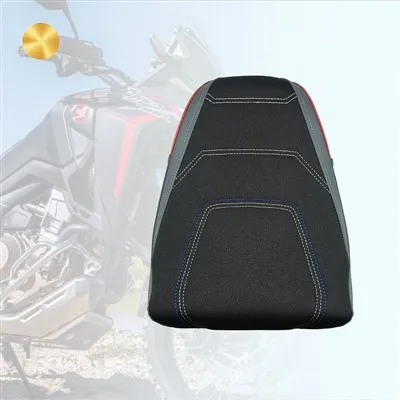
When old seat cushions that have been replaced no longer burden the planet but instead return to the production line as raw materials for new seats, the concept of sustainability truly transitions from marketing rhetoric to reality.