

In the quality evaluation system for aftermarket motorcycle seats, the leather coating process directly determines the product's durability, weather resistance, and riding experience, and embodies the core technologies of seat upholstery. Motorcycle seats are constantly exposed to complex outdoor environments such as sunlight, friction, and rain. Optimizing a single performance characteristic is insufficient to meet all scenario requirements; achieving a multidimensional balance between abrasion resistance, UV resistance, stain resistance, and tactile comfort is the technical core of high-end replacement seats.
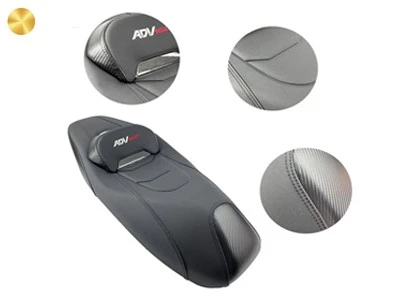
I. Abrasion-Resistant Coating Process: The Performance Foundation for High-Frequency Friction Scenarios
The abrasion-resistant coating serves as the core protective layer on the surface of motorcycle seat leather. Modified polyurethane coating technology is the mainstream approach, which balances abrasion resistance and fabric flexibility by adjusting resin ratios and coating thickness. In the industry's Martindale abrasion test, standard consumer-grade coatings typically withstand 5,000–8,000 cycles, while industrial-grade high-abrasion-resistant formulations can exceed 20,000 cycles. Thicker coatings do not necessarily equate to better performance; excessive thickness can lead to cracking when bent and a stiff feel. High-quality processes utilize multi-layer gradient coating to significantly enhance resistance to wear under long-term friction while maintaining a skin-friendly feel.
II. UV-Resistant Aging Treatment: Ensuring Longevity for Long-Term Outdoor Use
The core of a UV-resistant motorcycle seat lies in weather-resistant surface modification technology. By adding light stabilizers and anti-yellowing resins to the coating, it blocks UV rays from damaging the leather substrate. While conventional products may pass a 300-hour xenon lamp aging test, high-weatherability formulations can exceed 1,000 hours, effectively delaying aging issues such as fading, surface hardening, and brittle cracking. For tropical and high-altitude markets with intense sunlight, UV-resistant treatment is an essential process that can extend the seat's outdoor service life by 2–3 times, making it a core performance metric for global export markets.
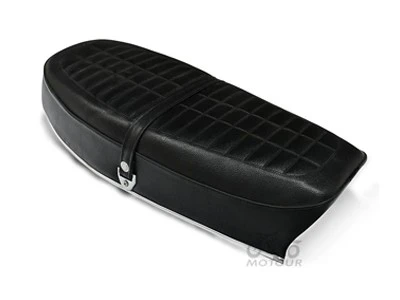
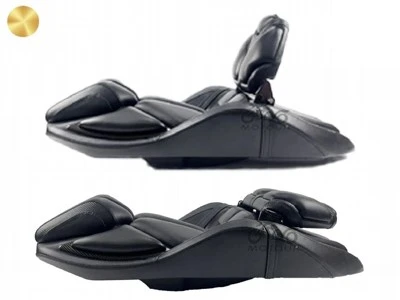
III. Stain-Resistant and Water-Repellent Process: Optimizing User Experience and Ease of Cleaning
The stain-resistant and water-repellent process utilizes low-surface-energy nanocoating technology to form a dense protective film on the leather's surface, allowing rainwater and everyday stains to roll off quickly; cleaning requires only a simple wipe to restore the surface to its original condition. This process must also ensure slip resistance to prevent the coating from becoming too slippery, which could compromise riding stability. A high-quality water-repellent solution can achieve a water contact angle of over 100°, while maintaining moderate friction on the fabric surface. This enhances convenience in daily use without compromising riding safety, making it suitable for a wide range of scenarios, including urban commuting and long-distance cruising.
IV. Scenario-Based Selection: Fabric Matching Logic for Models from the Four Major Brands
The four major brands have different market positioning for their models, and their selection of surface treatment processes has distinct priorities. Honda's commuter scooters and cruisers prioritize practicality, favoring a balanced formula that combines UV resistance and stain resistance; Yamaha's sport street bikes emphasize handling stability, utilizing coatings optimized for high abrasion resistance and slip resistance; Kawasaki's off-road and sportbike models, designed for high-intensity conditions, employ industrial-grade, highly durable and rugged formulations; BMW's premium models pursue a comprehensive experience, balancing the three core performance attributes with a refined, skin-friendly texture to align with their high-end market positioning.
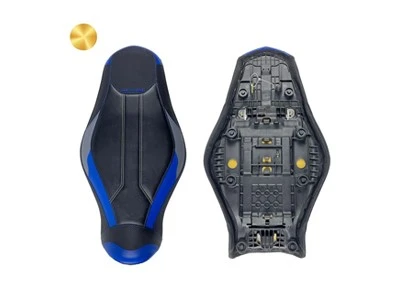
The ability to achieve a multidimensional balance in leather surface treatment is the core technological barrier for differentiation in the aftermarket motorcycle seat sector. As a professional motorcycle seat manufacturer in Jiangmen, Jiangmen Motour Technology possesses a comprehensive fabric quality control and customized processing system, capable of providing tailored surface treatment solutions for the full model ranges of these four major brands. The factory strictly monitors the abrasion resistance, weather resistance, and tactile feel metrics of every batch of fabric. Leveraging seven standardized production lines and high production capacity, it provides global customers with high-performance, scenario-specific seat solutions, helping partners enhance their market competitiveness.